
Value proposition
The carbon market: the new financial frontier of regenerative agriculture
Context on the agricultural carbon market, its opportunities and risks, and how Cool Earth Coin digitally represents CO₂ captured through regenerative agriculture.
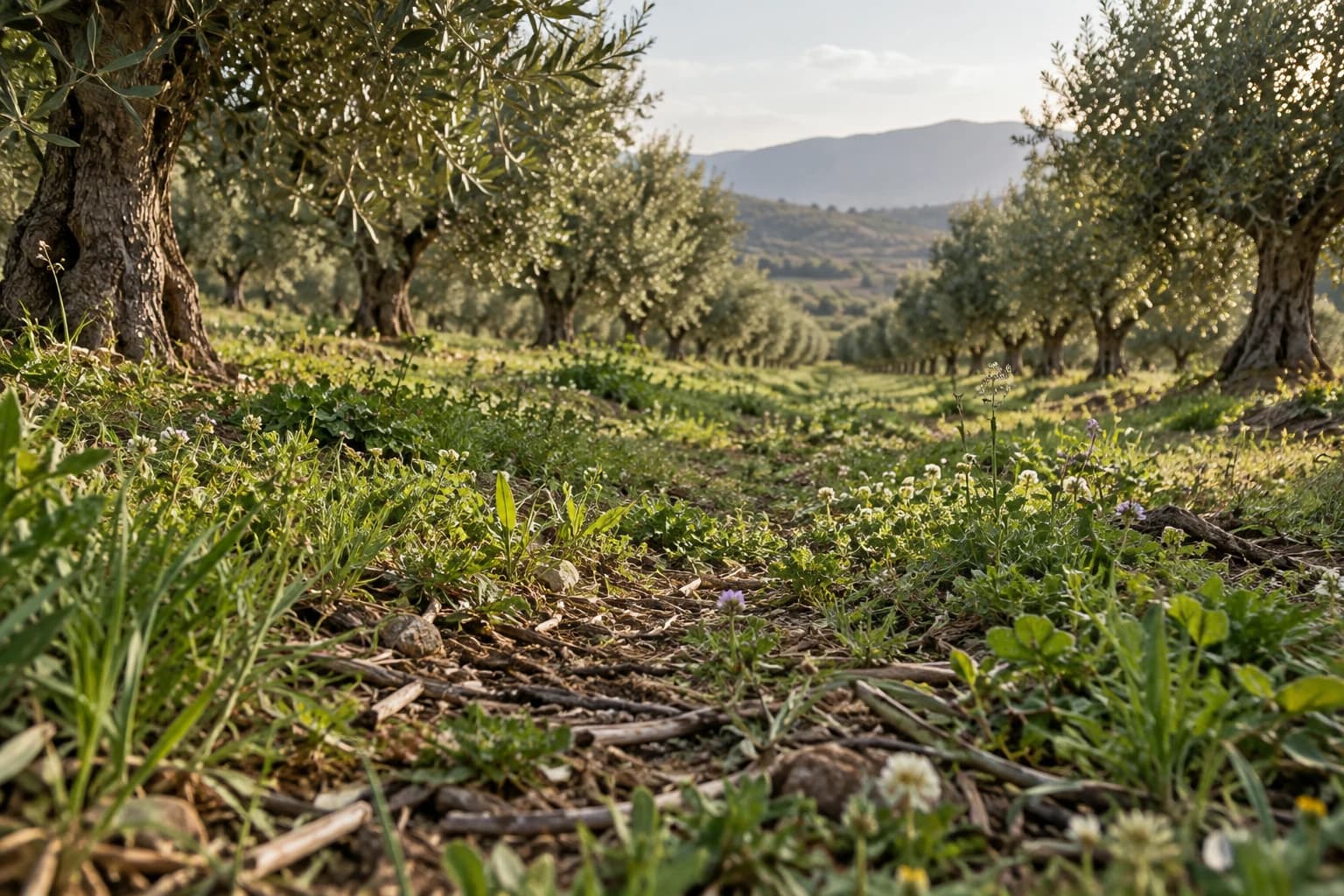
For decades, the economics of agriculture were based on sowing, growing, harvesting and selling. Today, an additional dimension is emerging: soil can also become a climate asset capable of generating income through carbon rights.
The belief that agriculture plays a less significant role in greenhouse gas emissions than energy, heavy industry or transport is mistaken. Agriculture contributes to global emissions, with estimates putting its share at up to 20% of the total. However, implementing changes to reduce those emissions is costly and requires external financing.
This transformation creates a particularly compelling opportunity for investors. Through cover crops, crop rotation, improved fertiliser use, waste management and certain livestock practices, regenerative agriculture can increase the organic carbon stored in soil and reduce greenhouse gas emissions. Under certain conditions, these outcomes can be converted into tradable carbon credits.
The question is therefore no longer simply how much a hectare of land produces, but how much economic value it can generate simultaneously as an agricultural, environmental and climate asset.
From agricultural soil to financial asset
In simple terms, a carbon credit represents one tonne of CO₂ equivalent reduced or removed from the atmosphere under a recognised methodology and subject to auditable measurement and verification procedures.
In regenerative agriculture, a particularly attractive area is soil organic carbon (SOC). When certain agricultural practices increase the carbon stored in soil, this can result in a net removal of CO₂ from the atmosphere.
The concept is financially powerful: turning improved management of a physical asset, land, into an additional income stream linked to an environmental asset, carbon.
A market that remains small but offers substantial growth potential
The market is still far from mature. In 2025, the FAO reported that agrifood systems accounted for more than 10% of projects in the voluntary carbon market, but only around 1% of credits issued. There is therefore a considerable gap between agriculture’s potential importance and its actual participation in the carbon market. This creates significant growth potential as technology and standards help overcome these barriers.
The World Bank notes that carbon markets are developing a more mature ecosystem for generating, trading and assessing credits. At the same time, it warns that the supply of credits has continued to exceed demand in certain segments and that prices can vary substantially depending on the type and quality of the credit.
Investing in agricultural carbon therefore involves more than simply buying credits in the expectation that their price will rise.
Where does the investment opportunity really lie?
Agriculture occupies a unique position among emissions reduction solutions: the sector can reduce its own emissions and also remove carbon dioxide from the atmosphere. Most other industries, by contrast, can only seek to minimise their footprint. This is where the significant investment opportunity lies.
There are at least four models.
The first is to invest directly in agricultural projects. Investors provide capital to finance the transition from conventional farms to regenerative models and subsequently share in the income generated by the credits.
The second is to finance farmers through structures similar to project finance. The farmer retains the farming operation, while the investor finances transition costs in exchange for a contractual share of future carbon revenues.
The third is to build diversified portfolios of credits from multiple farms and regions. Diversification can reduce the risk associated with a particular crop, soil type or climate zone.
The fourth, probably the most sophisticated from a financial perspective, is to invest in the companies providing the necessary infrastructure: carbon measurement, soil analysis, traceability technology, certification platforms, remote sensing, artificial intelligence and trading systems.
This highlights a fundamental distinction from other financial assets: the underlying value lies not only in the credit itself, but in the ability to demonstrate that it represents additional, measurable and verifiable carbon.
The key challenge: measuring carbon
Soil carbon is not a conventional financial deposit. There is no meter showing, on a daily basis, how many tonnes of CO₂ a hectare contains.
A baseline must be established, existing carbon measured, the outcome without the project determined, and the subsequent change verified.
In addition, carbon stored in soil can return to the atmosphere if a farmer stops using certain practices. This gives rise to concepts such as additionality, permanence, leakage and reversal risk. Technology, however, is helping to address these challenges.
Europe could become a particularly significant market
For European investors, there is an additional strategic consideration: the creation of a European certification framework.
The European Union has developed the CRCF framework, Carbon Removals and Carbon Farming, to establish common certification rules. In July 2026, the European Commission adopted certification methodologies for agriculture and agroforestry on mineral soils, the restoration of peatlands and other organic soils, and afforestation.
The objective is particularly significant: enabling agriculture to receive payments based on verifiable climate outcomes, supplementing farmers’ traditional income.
A European standard could reduce one of today’s main challenges: fragmented methodologies and the difficulty of comparing credits from different sources.
Australia: a success story
Since the Carbon Credits Act was enacted in 2011, more than a thousand projects across the country have reduced emissions, captured carbon and generated alternative income streams for farming communities. This has benefited both the environment and farm profitability, attracting growing interest from investors.
Over the past decade, active projects have achieved carbon emissions reductions equivalent to millions of tonnes. Conservative estimates put the resulting reinvestment in agriculture at around five hundred million dollars. This capital flows back into farms across the country, supporting investment in infrastructure and technology and helping sustain businesses and jobs during droughts and other periods of difficulty.
Not every carbon credit is a sound asset
This is probably the most important caution for investors.
An agricultural carbon credit may look attractive on paper but prove economically weak in practice.
Factors to assess include:
- the methodology used;
- the quality of the baseline;
- additionality;
- permanence;
- reversal risk;
- the frequency and quality of measurements;
- the independent body verifying the results;
- certification costs;
- revenue sharing between the farmer, developer and investor;
- the ultimate buyer of the credit;
- market liquidity;
- regulatory risk.
Recent developments in VM0042 are illustrative. Version 2.2 was approved by the Integrity Council for the Voluntary Carbon Market under the Core Carbon Principles. In 2026, Verra introduced corrections and clarifications relating, among other matters, to additionality, baselines and measurement.
This shows that the market is becoming more professional, but also that standards are still evolving.
A new way to value land
The most profound implication may be conceptual.
Traditionally, a farm’s value depends on its productivity, location, soil quality, water availability and expected future income.
In future, a new variable could be added:
the land’s capacity to generate certifiable climate services.
Two farms with identical agricultural productivity could have different values if one has a significantly greater capacity to generate high-integrity carbon credits.
Soil would thus cease to be solely a factor of production and also become an environmental asset that can be monetised.
Conclusion
Investment in carbon rights associated with regenerative agriculture remains at a relatively early stage. This is precisely why it combines opportunity and risk.
The opportunity arises from a remarkable convergence: the need for decarbonisation, agricultural transformation, corporate demand for climate assets, the development of standards, technological advances and the search for new sources of rural financing.
The risk is that agricultural carbon is far more complex to measure and verify than other financial assets. Credit quality will therefore matter much more than its label alone.
If this trend becomes established, regenerative agriculture could represent more than an environmental transformation. It could become a new financial infrastructure for the rural economy, in which each hectare has productive, asset and climate value simultaneously.
This may be one of the major investment opportunities in the market over the coming decades.
Why COOL EARTH COIN?
The Cool Earth Coin project aims to develop a system enabling the digital representation, traceability and certification of carbon dioxide (CO₂) capture resulting from regenerative agriculture practices.
The business model is based on capturing CO₂ through regenerative agriculture practices, certifying it under recognised methodologies and marketing it in the voluntary carbon market through the issuance of the $CEC token.
The $CEC token is designed primarily to represent standardised units of positive climate impact. Each $CEC token is equivalent to 100 grams of CO₂ captured, reduced or sequestered in soil, duly certified under recognised methodologies.
Each $CEC token is linked to duly certified CO₂ units, generated either through the purchase of voluntary carbon credits or through direct measurement of carbon removals certified by specialist entities.
The project is structured around the following main elements:
- generating or acquiring CO₂ capture;
- certifying it under recognised standards;
- recording it using blockchain technology to ensure the traceability and transparency of its environmental impact.
Specifically, CO₂ reductions are calculated using recognised methodologies, verified by independent entities and recorded in blockchain-based systems.
In this context, the project seeks to connect:
- the generation of verifiable environmental impact through CO₂ reduction or sequestration;
- its digital representation through tokens, enabling traceability, certification and potential integration into markets.
The token acts as a mechanism for representing positive environmental impact, facilitating its recording, monitoring and eventual circulation. Revenue would be generated through the issuance and sale of tokens.
Products and services
The project does not offer complex technology products or its own blockchain infrastructure; instead, it focuses on generation, certification and tokenisation.
Specifically, the $CEC token ecosystem is structured around:
- the digital representation of units of CO₂ reduced or removed;
- the traceability and certification of those reductions; and
- their use as a tool to certify positive environmental impact.
Target markets
The project targets
- parties interested in the generation, certification and use of certified carbon sequestration within the voluntary carbon market, as well as climate impact solutions:
- Strategic investors (initial stage): participants with experience in carbon credits or sustainability who join the project at an early stage.
- End users and the wider market (subsequent stage): once unrestricted trading of the token is permitted, any participant interested in buying or exchanging tokens linked to climate impact.
Risk warning
The investment models described in the first section are presented solely as market context and do not describe $CEC. $CEC confers no economic rights, creditor rights or profit-sharing rights, nor any rights over carbon credits or the proceeds from their sale.
$CEC is not a financial instrument. The $CEC crypto-asset may lose all or part of its value, may not always be transferable and may not be liquid. It is not covered by investor compensation schemes (Directive 97/9/EC) or deposit guarantee schemes (Directive 2014/49/EU). This document does not constitute financial advice. Any decision to acquire $CEC should be based on the full content of the whitepaper.
This crypto-asset marketing communication has not been reviewed or approved by any competent authority in any Member State of the European Union. The offeror of the crypto-asset is solely responsible for the content of this crypto-asset marketing communication.
The whitepaper has been published and is available at https://www.coolearthcoin.com/whitepaper. The English-language version is the official and legally binding version; the Spanish translation is provided for information purposes only. Issuer and offeror: Cool Earth Coin, S.A. Contact: info@coolearthcoin.com. Telephone: +34 647 82 39 17.